Improving Event Creation UX in a B2B Admin Platform
My role: Product DesignerGoal: Improve UX of event creation flow for HR admins.Scope: End-to-end redesignIn HealthOS, a B2B SaaS platform, HR admins configure wellbeing events such as courses, workshops, and recurring sessions that are central to company programs.
Due to the flexible and highly configurable nature of the system, the setup process became complex, knowledge-heavy, and prone to error. Admins were required to make multiple decisions upfront without clear guidance, often relying on Customer Success to complete configurations correctly.
This led to frequent misconfigurations, particularly among first-time or infrequent users. The goal of this project was to redesign the event creation experience so admins can complete setup independently, with clear guidance and confidence on the first attempt.
When Flexibility Becomes Complexity
The core issue was not missing functionality, but cognitive overload. The flow surfaced too many decisions upfront and assumed prior knowledge of system logic.
A key breakdown occurred in the distinction between event-level and session-level configuration. Field naming and grouping made it difficult to understand scope, while the lack of clear progress left users disoriented within the process.
Rather than adding more guidance, the solution required restructuring the flow to better align with user mental models.
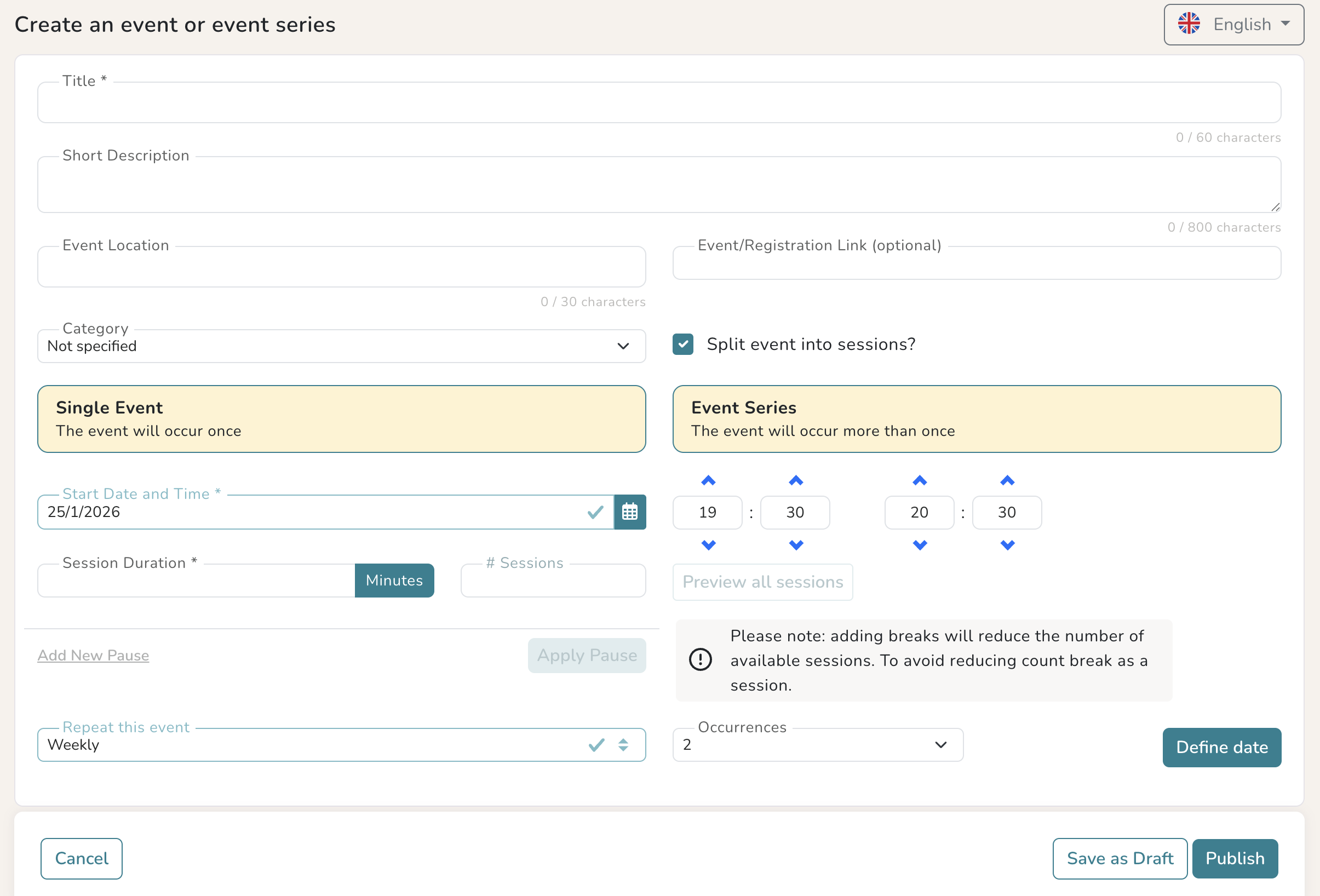
Restructuring the Experience
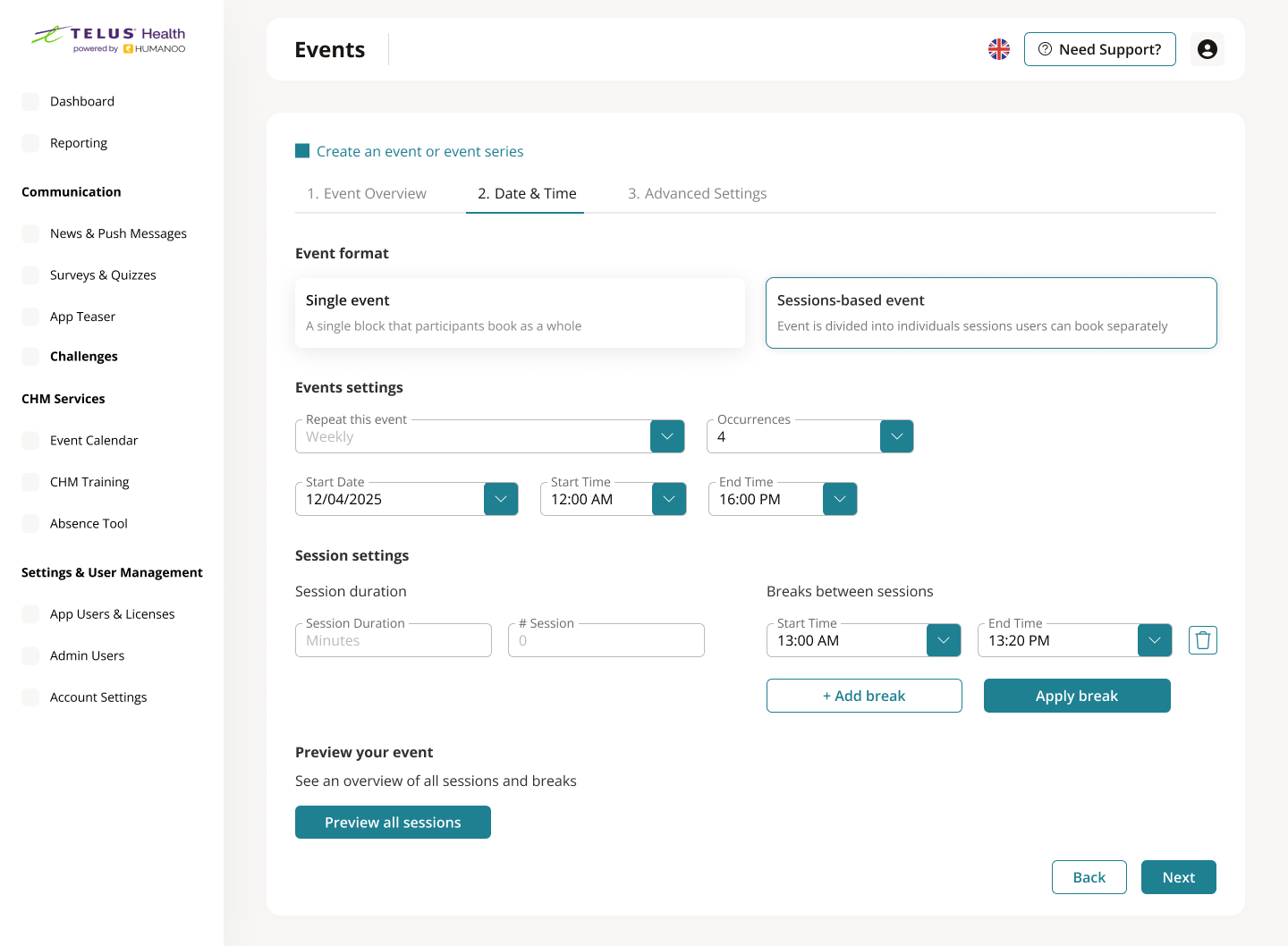
Rather than treating event creation as a single, continuous form, I restructured the flow into a step-based process aligned with how HR admins approach event setup.
The experience was organised into a clear sequence — defining the event type, setting the schedule, configuring sessions, and finalising details. Each step isolates a specific decision area, allowing complexity to be introduced progressively.
This approach preserves system flexibility while reducing cognitive load and enabling more accurate first-time configuration.
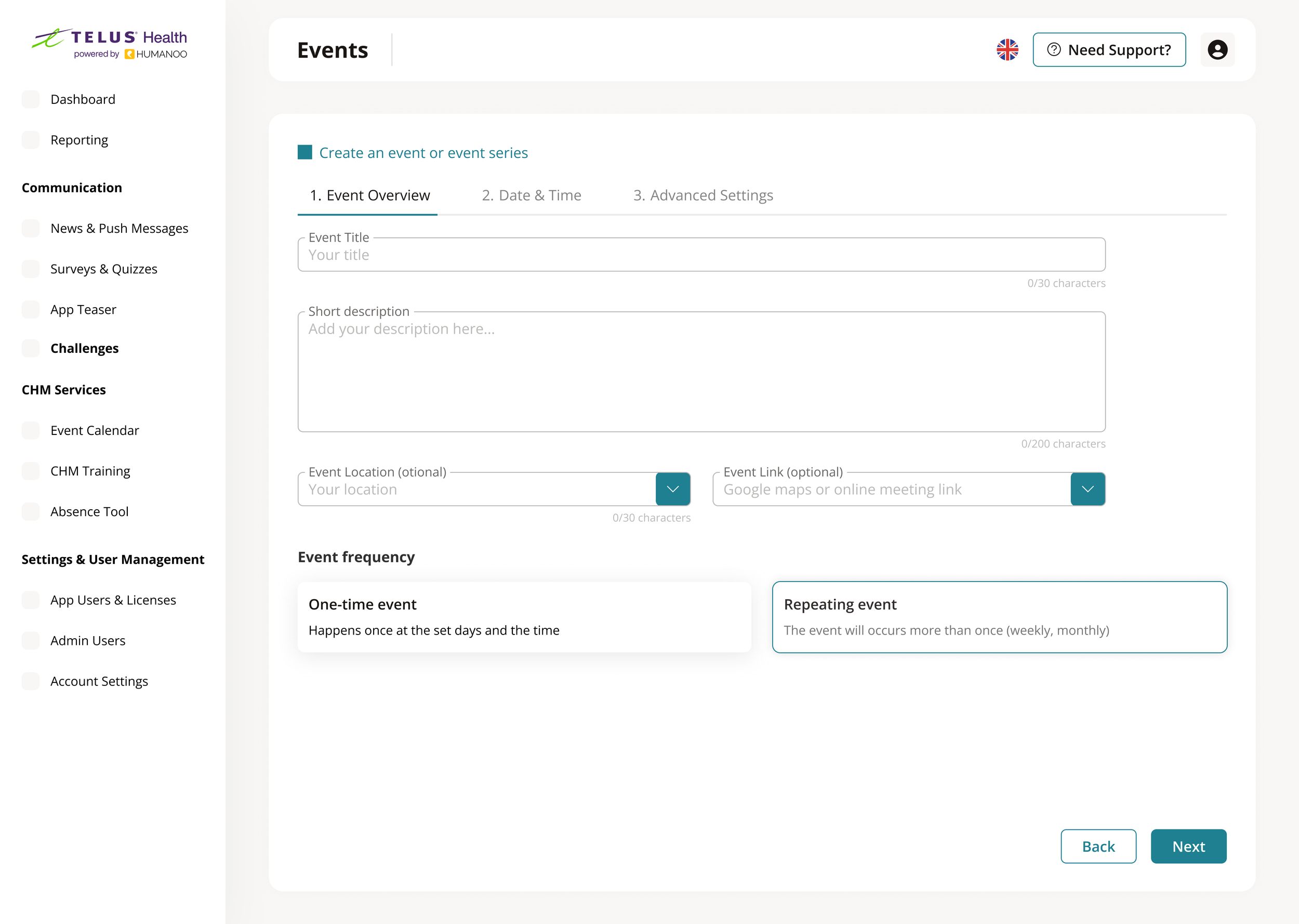
Designing a Step-Based Configuration Flow
The redesigned flow introduces a step-based configuration model, grouping inputs by intent and aligning them with specific stages of event setup. Field naming was refined to reduce ambiguity, and a clear distinction was established between event-level and session-level configuration.
Progress indicators provide continuous orientation, making the overall structure of the process visible.
This approach reduces dependency on prior system knowledge and supports accurate, self-sufficient configuration.
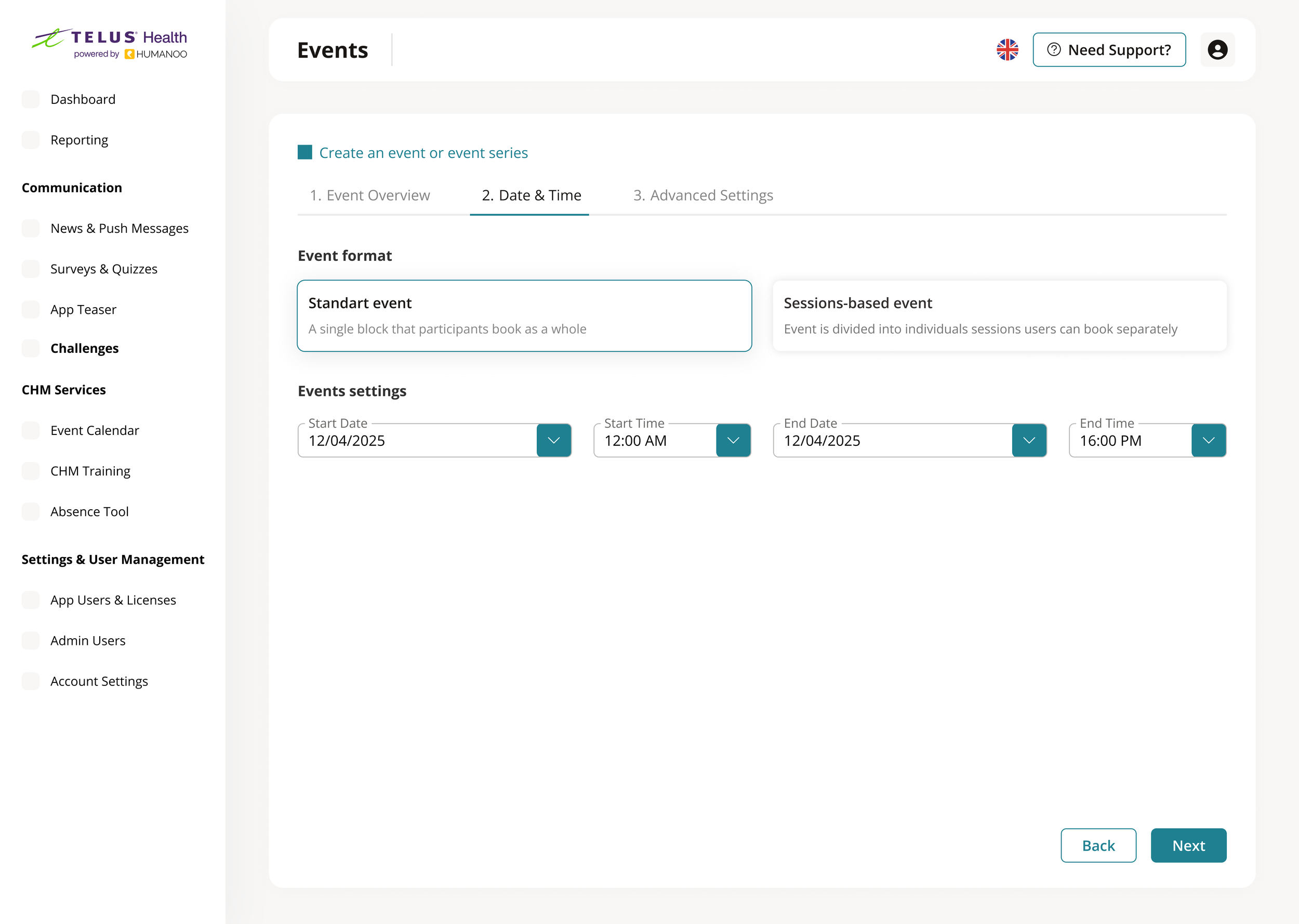
Designing for Real Usage
Most HR admins create events infrequently, making recall more important than speed. The experience is designed around predictable steps, clear labelling, and a consistent structure to support re-entry, review, and editing.
Prioritising clarity over efficiency reduces the risk of misconfiguration and decreases reliance on Customer Success.
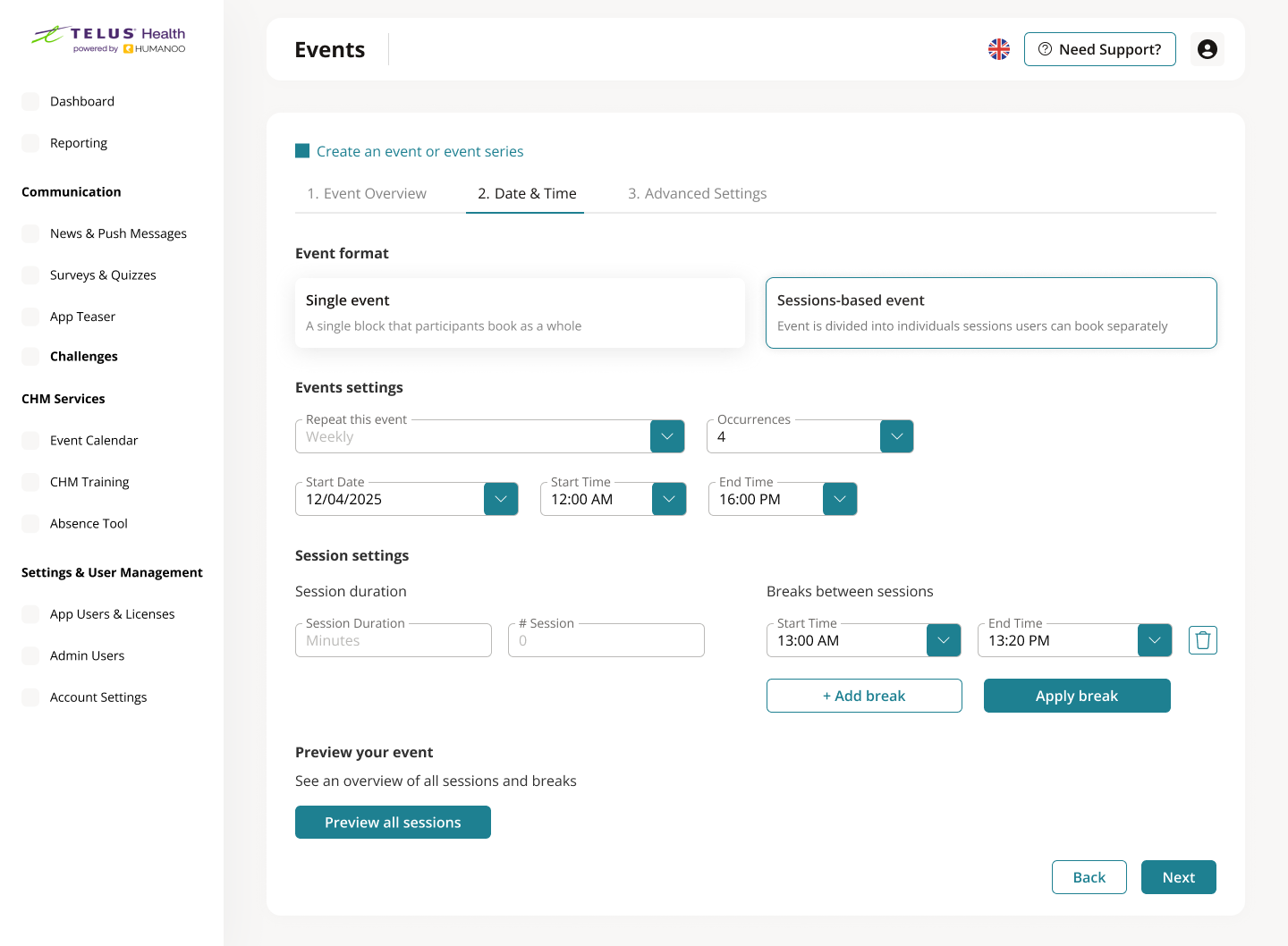
Ensuring Full Coverage and Validation
To ensure the redesigned flow covered all relevant scenarios, I mapped existing event types and configuration patterns based on the calendar overview. This provided a clear understanding of system complexity and informed the structure of the new experience.
The flow was prototyped in Lovable and validated through internal user testing. This revealed gaps in copy clarity and uncovered edge cases around event editing, which were addressed through iteration to improve completeness and reliability.
Key outcomes
The redesigned flow reduces errors by structuring complex configuration into clear, predictable steps, enabling first-time and infrequent admins to complete setup with confidence.
This reinforces a key principle in B2B admin design: for complex, infrequent workflows, clarity and structured guidance have a greater impact than increasing feature depth.