Designing a Global Employee Support Experience
My role: Product Designer Scope of work: End-to-end UX for chat and bookingFocus: Emotionally safe flowEmployee support is often accessed in high-stress moments, where clarity and speed are critical. In this product, users could reach professional support either through real-time chat or by booking a session with a specialist, depending on availability and eligibility.
The objective was to design end-to-end flows for both entry points that reduce uncertainty, clearly communicate available options, and provide predictable outcomes at each step of the journey.
Understanding the problem space
While chat and booking appear simple entry points, both flows are driven by conditional logic around eligibility, availability, and user context. Users needed to navigate these decisions without encountering uncertainty or dead ends.
As these interactions often occur in emotionally sensitive moments, even minor friction can lead to drop-off. The challenge was to translate complex system logic into a clear, predictable user experience.
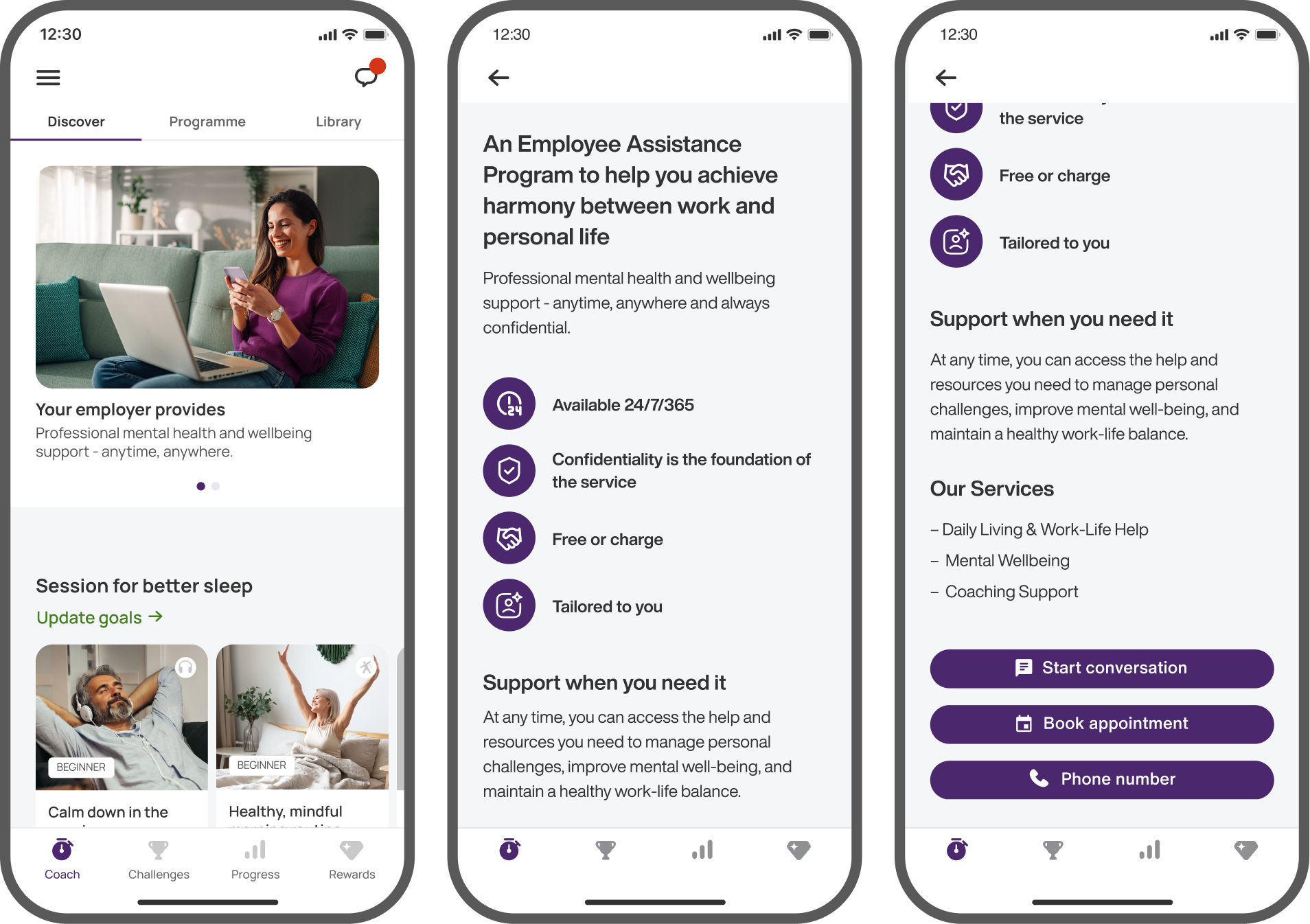
From Entry Point to Resolution: Chat Flow Design
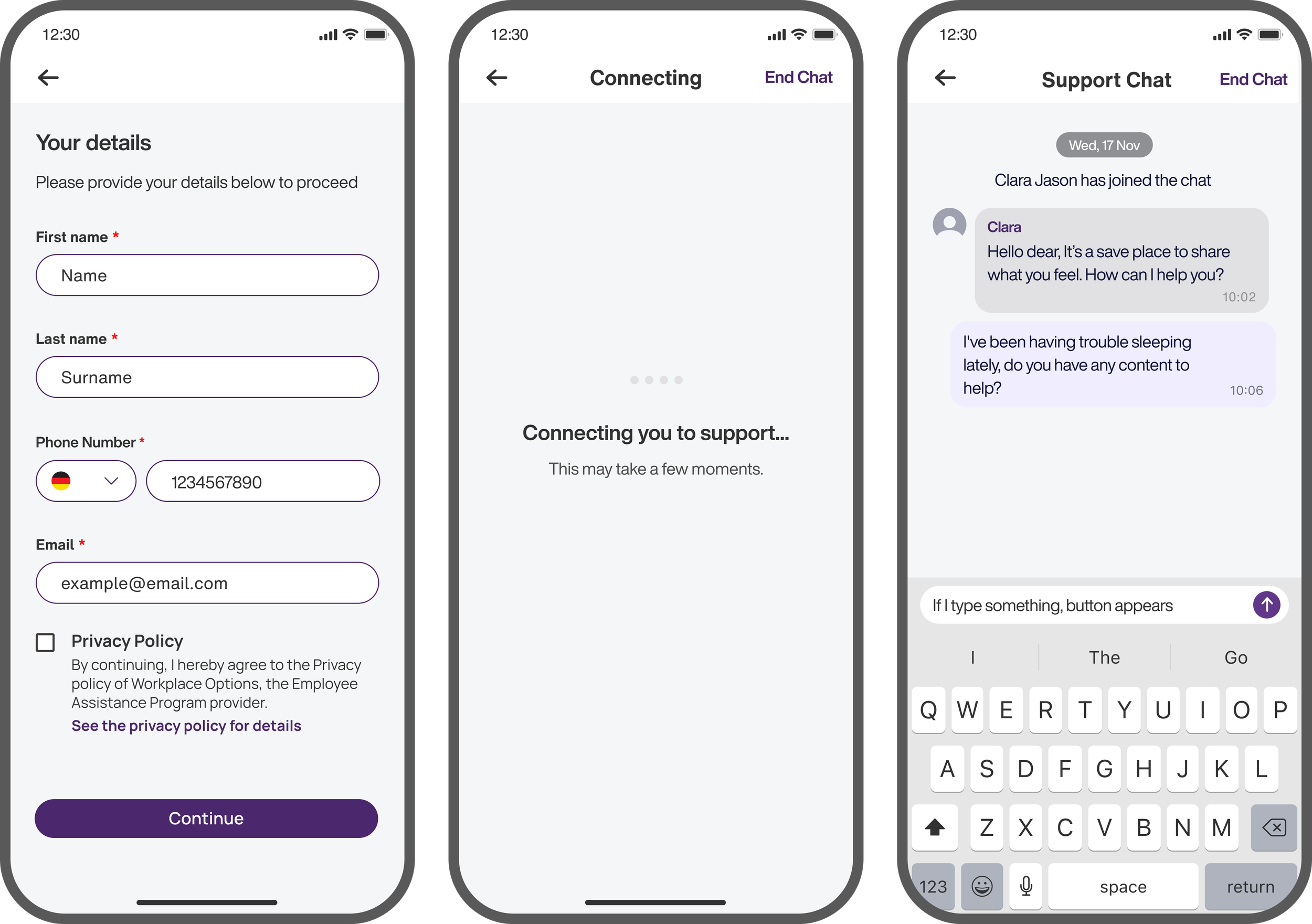
The chat flow was designed to provide fast access to support while clearly communicating expectations at each step. Rather than front-loading information, the experience uses progressive disclosure to confirm eligibility and prepare users for the interaction.
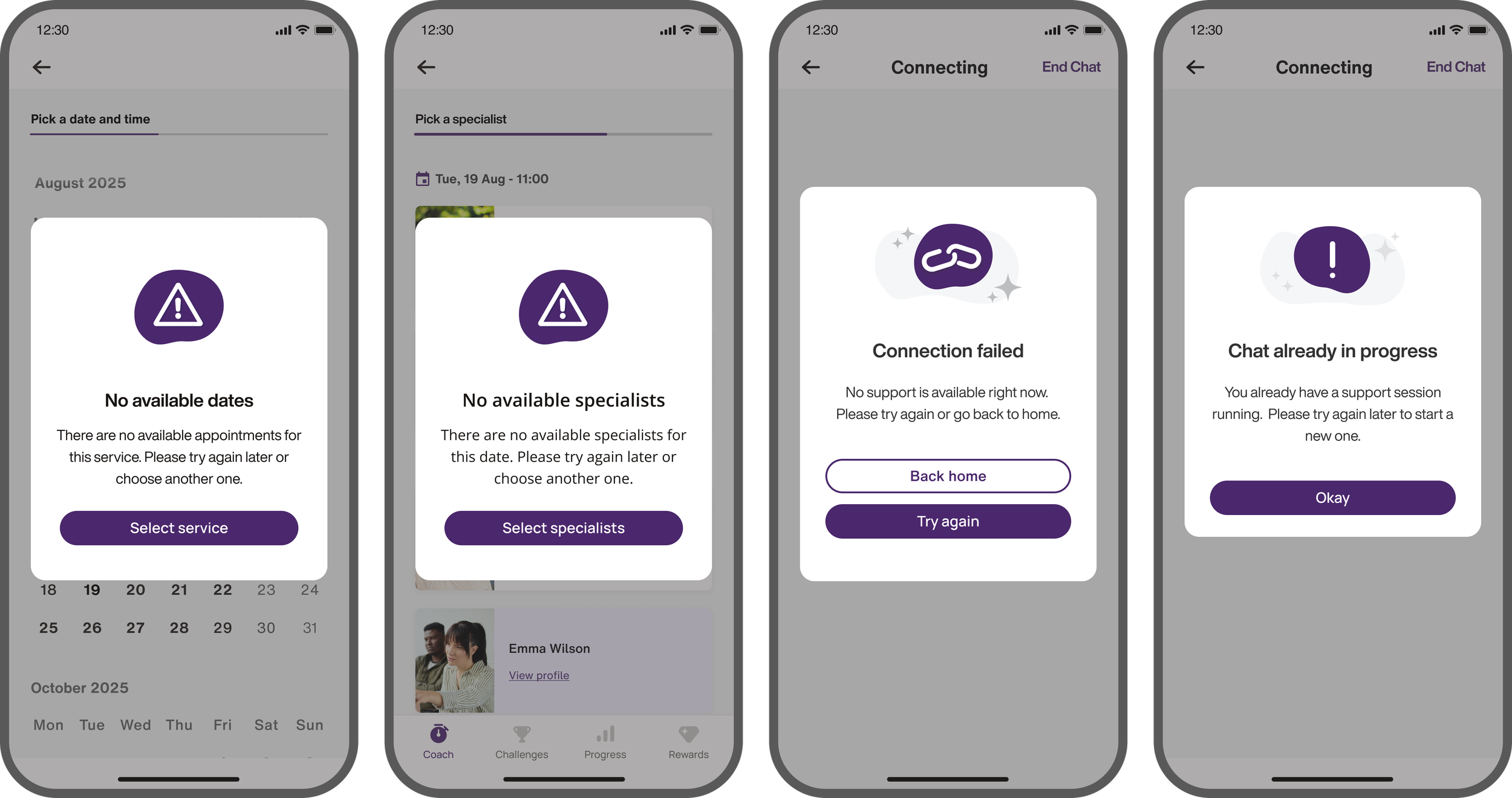
Waiting and error states were designed as core system states, with calm and reassuring messaging that avoids unnecessary urgency while maintaining transparency.
The overall approach reduces friction while ensuring users remain oriented and confident throughout the flow.
Transparent Support Flow
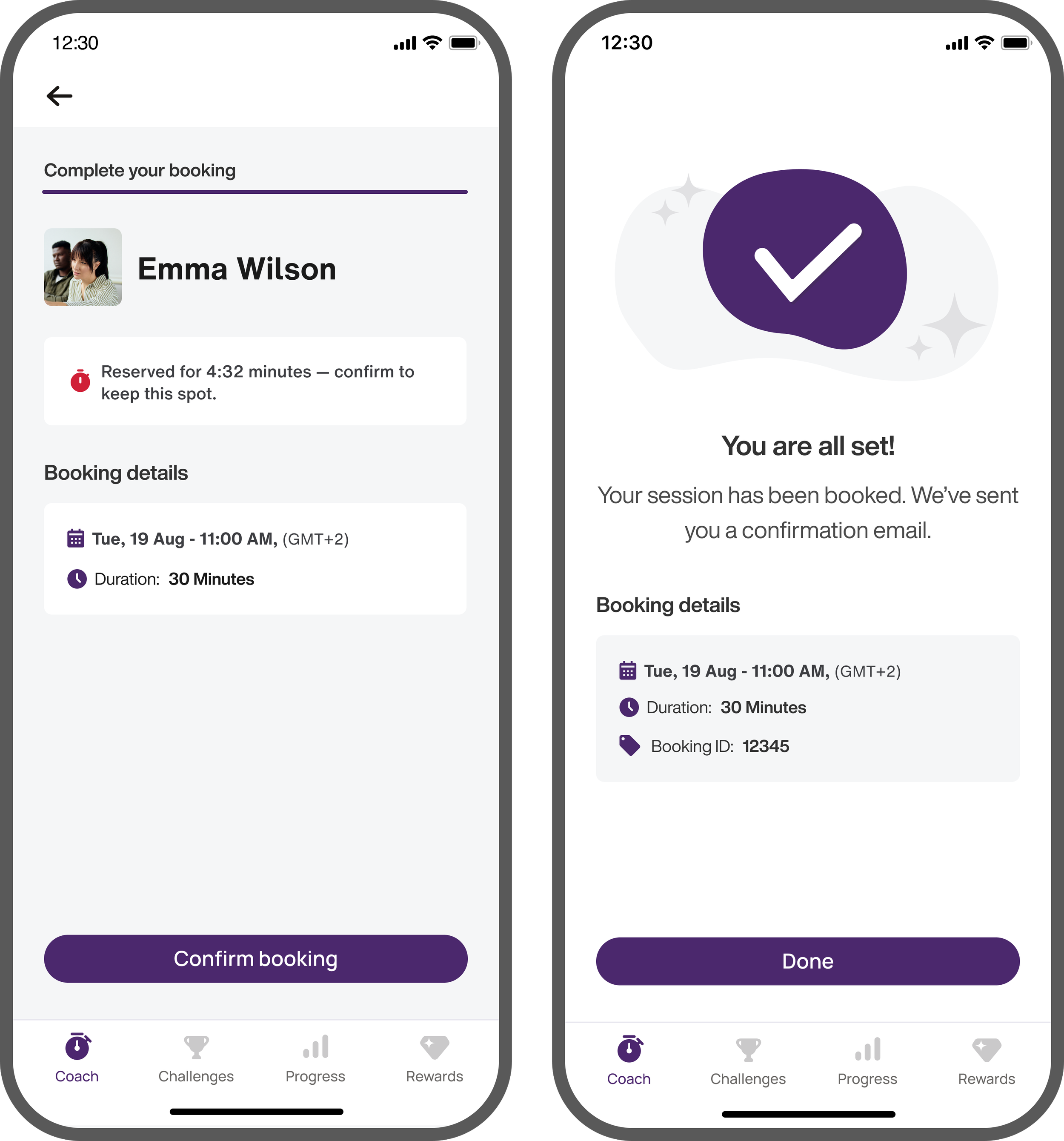
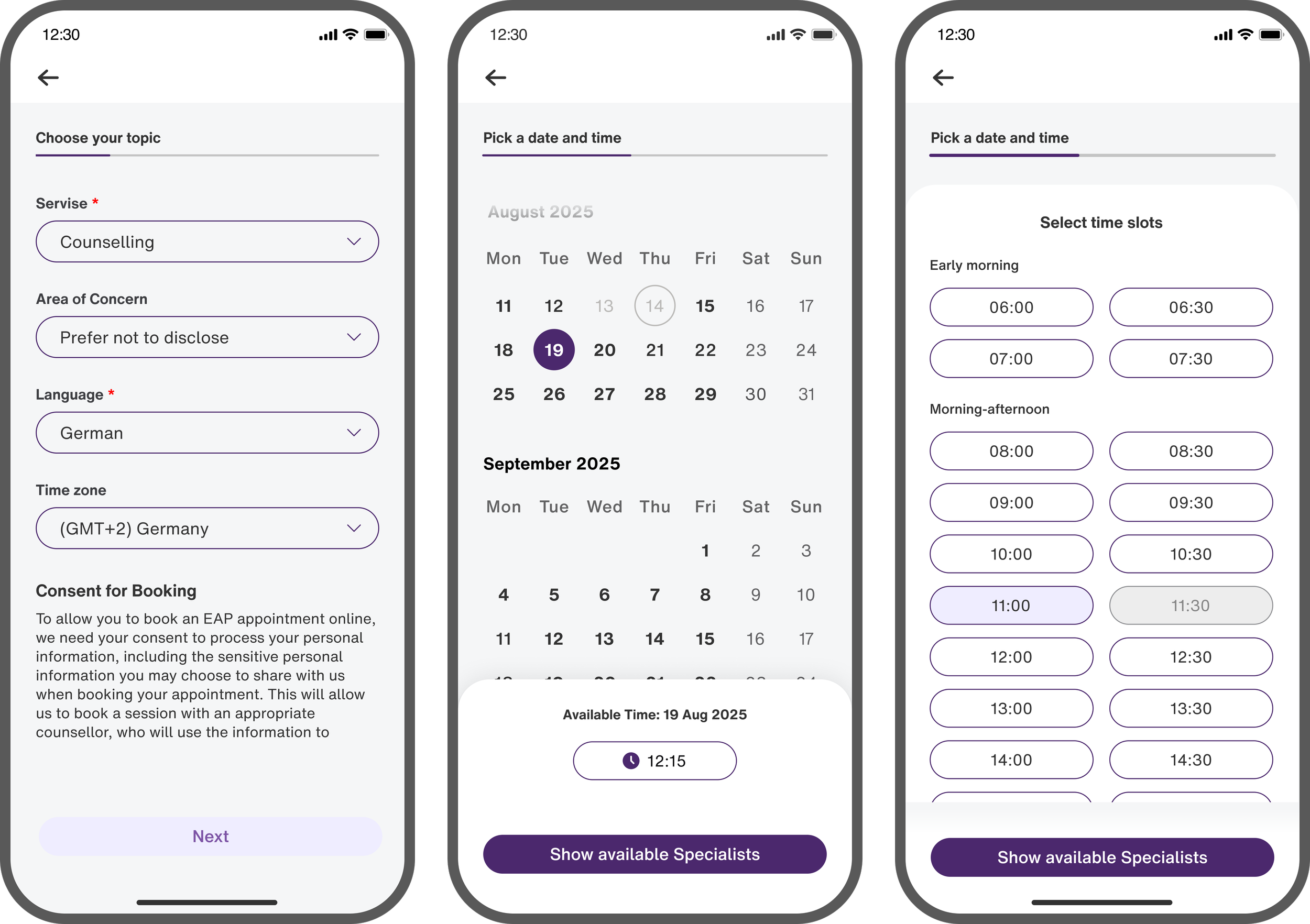
Booking an online session required a more structured journey. Users needed to review available specialists, select a suitable time slot, and confirm their booking.
The flow was designed to feel predictable and transparent, clearly communicating progress and next steps at each stage. Confirmation and failure states were given the same level of attention as the happy path, ensuring users always understood whether their session was successfully booked and what would happen next.
Designing for non-ideal scenarios
Non-ideal scenarios such as unavailable time slots, incomplete input, and booking failures were treated as core system states rather than exceptions.
Designing these moments with clarity ensures the experience remains supportive even when it cannot continue, helping users stay oriented and understand their next steps.
Key outcome
The result is a set of structured, end-to-end flows for chat and session booking that guide users through sensitive interactions with clarity and reassurance.
This reinforced a key principle: in high-stress contexts, designing flows — not just screens — is essential. Clear expectations, predictable progression, and well-defined system states directly shape user confidence and trust.