Insurance Verification Experience
My Role: Product Designer
Focus: Systems & Error States
Support tickets: 12.79% → 5%
Verification checks insurance eligibility to unlock protected features and rewards. In this white-label app, it also guards against misuse -a high-stakes moment for users and businesses.
Over time, this step became a primary confusion source.
Understanding System Reality
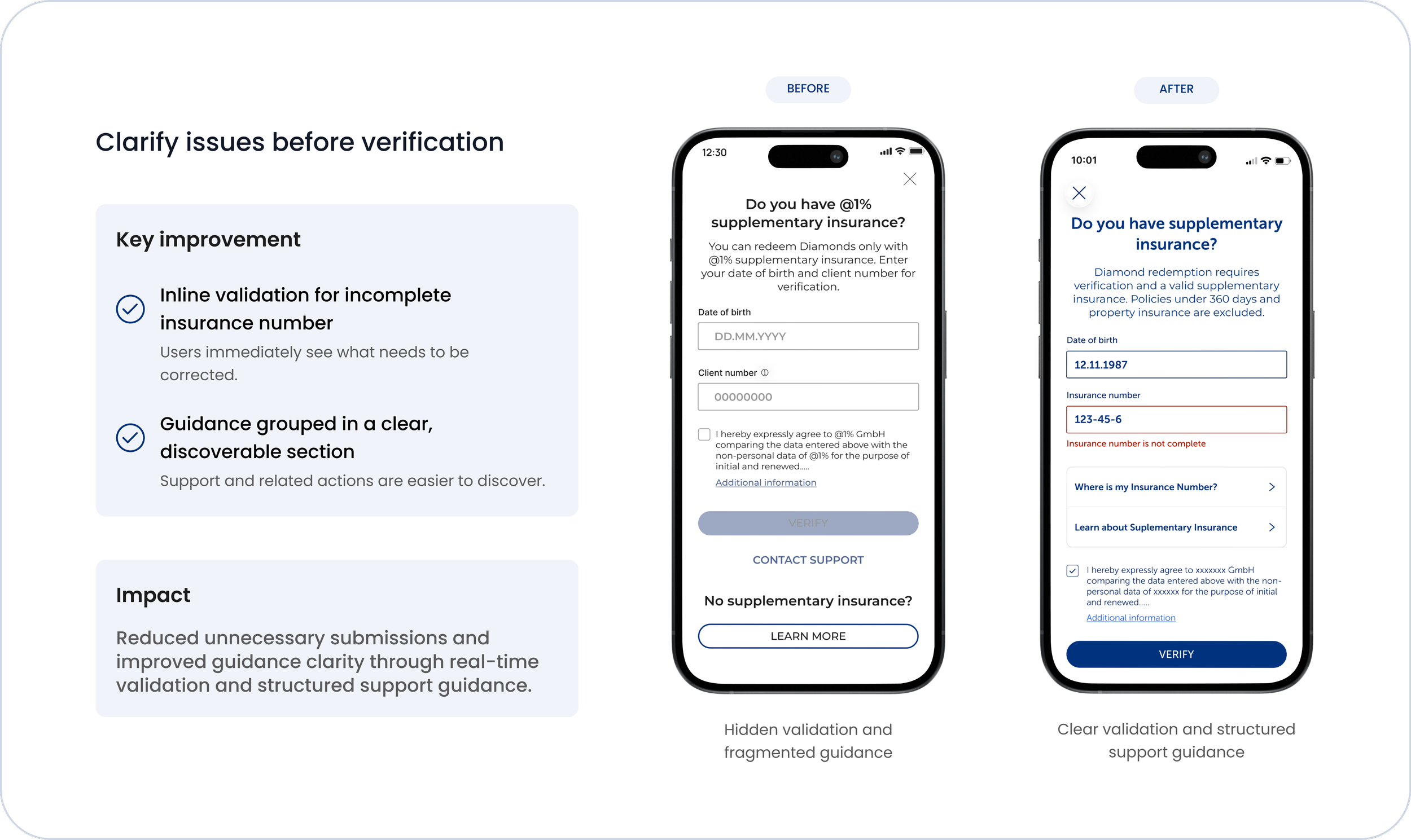
Testing showed existing guidance hid behind an inaccessible info icon - too small, non-interactive, and easy to miss, failing accessibility standards, users overlooked it completely.
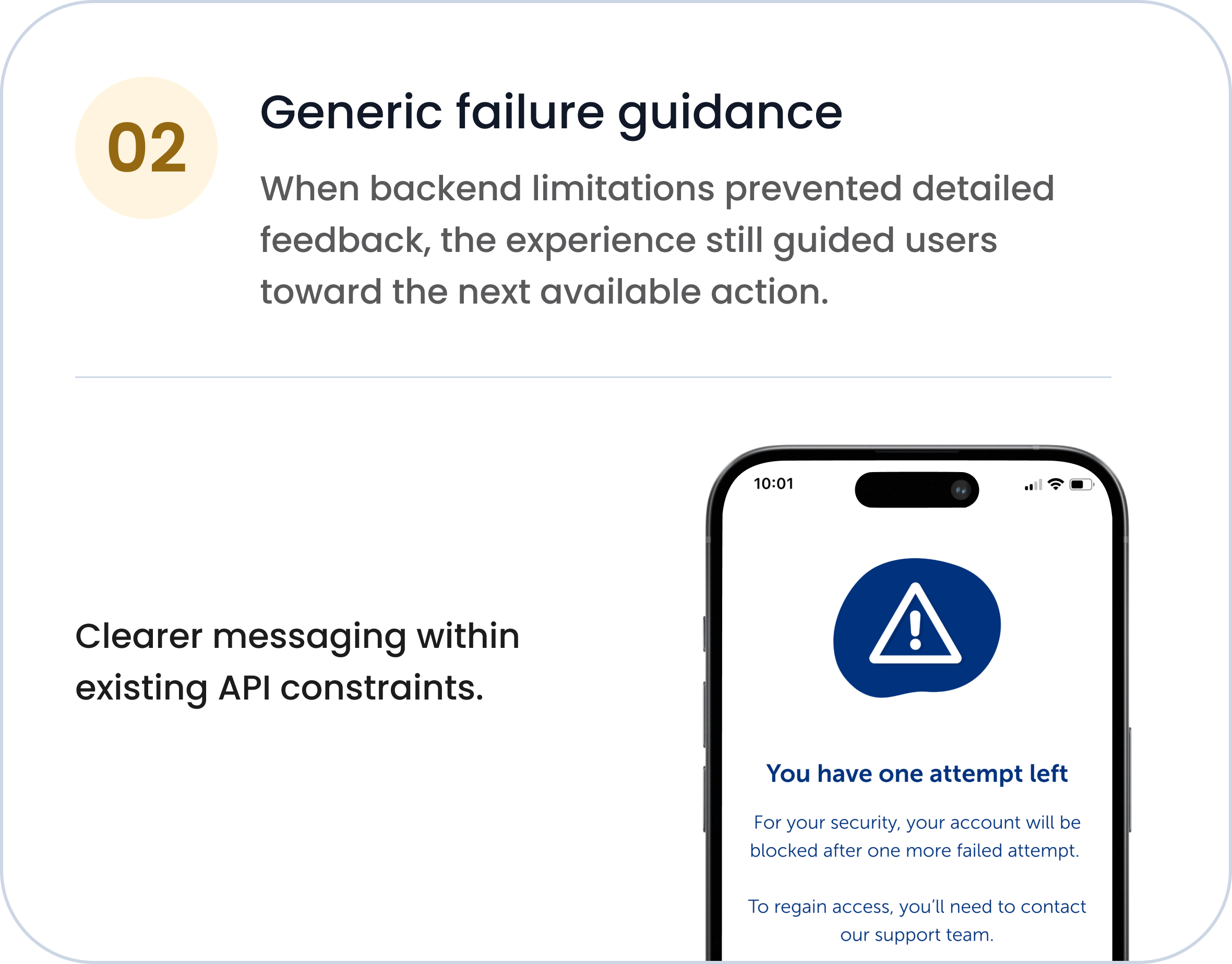
Working with engineers then revealed API timing gaps (nightly syncs), and GDPR limits invisible to users. Client requested new error states, but users faced generic failures without knowing if data was syncing, eligible, or input wrong - instead, I made guidance visible and actionable upfront, solving root causes over symptoms.
Where the Old Experience Broke
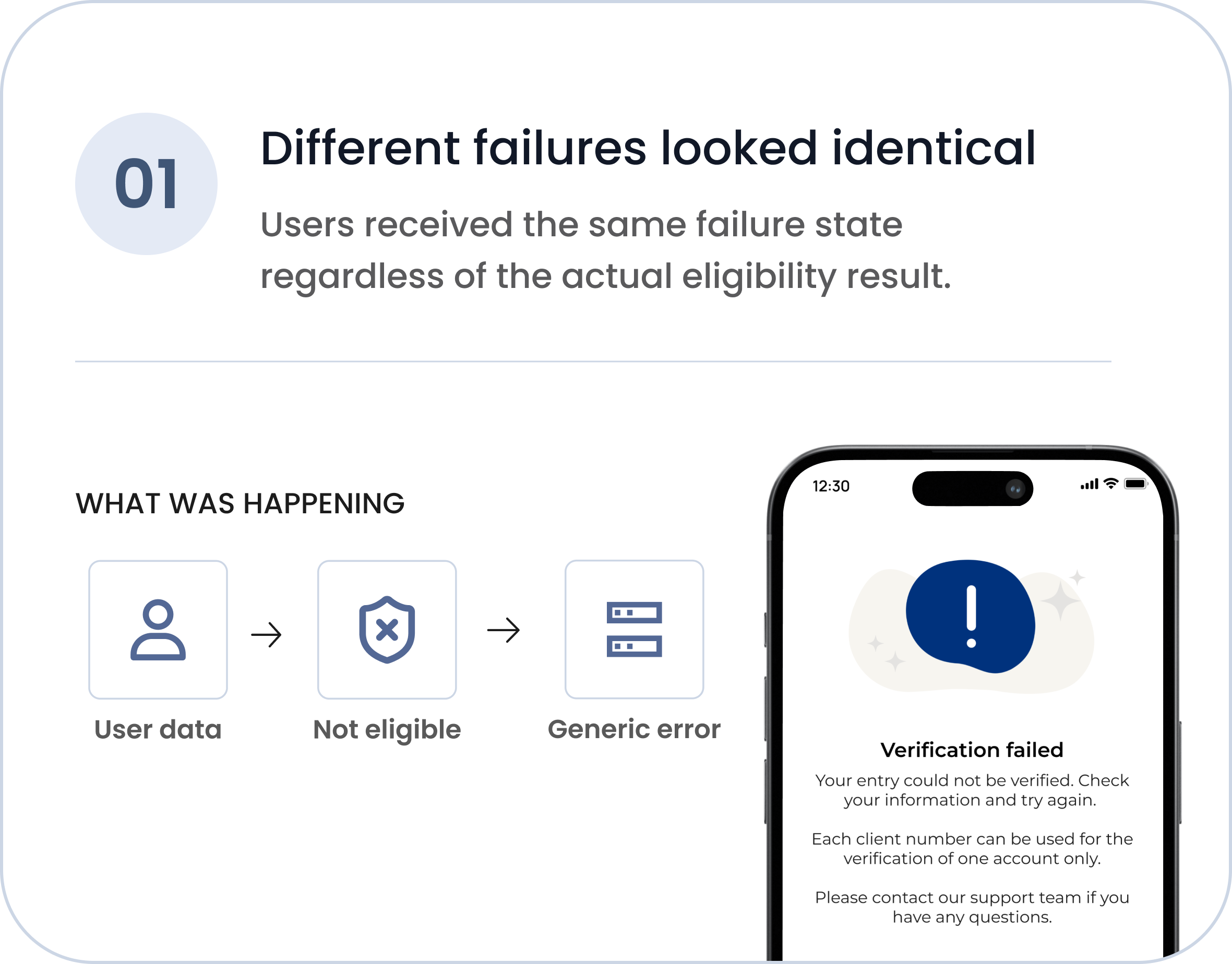
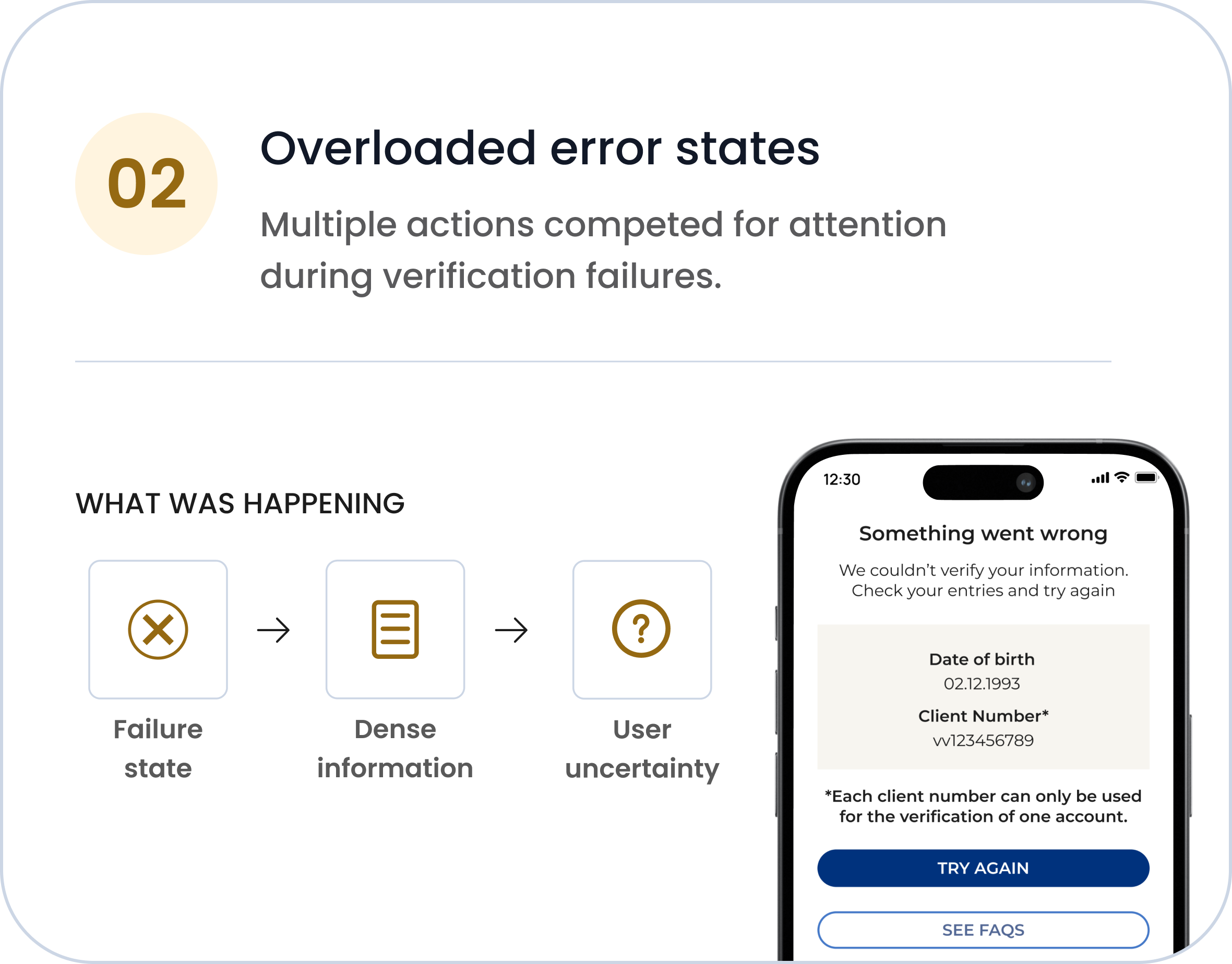
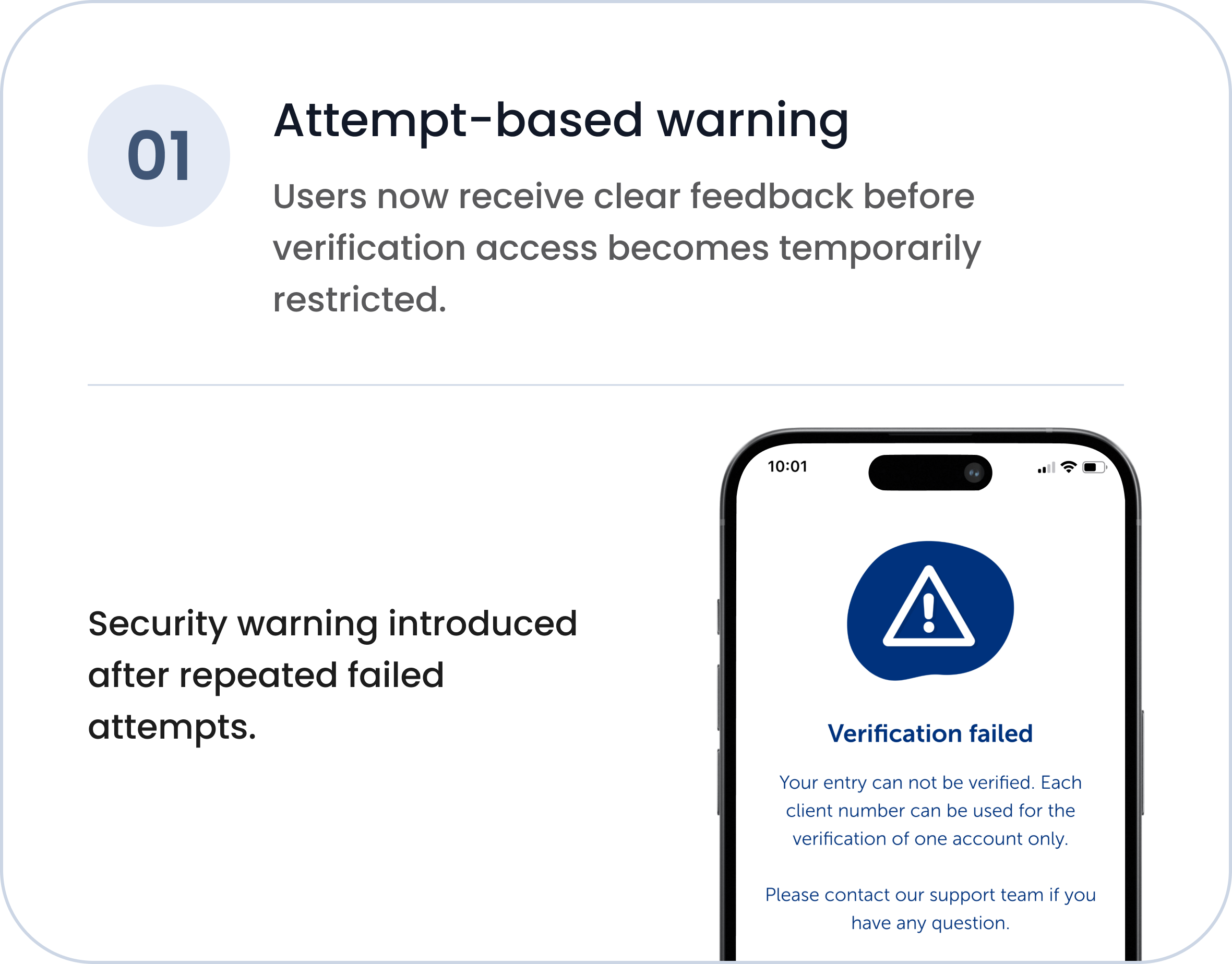
With underlying issues clear, the old experience failed across scenarios-missing data, ineligibility, input errors, security blocks-all triggering identical generic screens.
Dense, scannable text offered no guidance; users couldn't tell if retrying helped or if they were stuck, with eligibility misframed as failure. The interface ignored real system behaviour, turning uncertainty into frustration.
Making Info Scannable
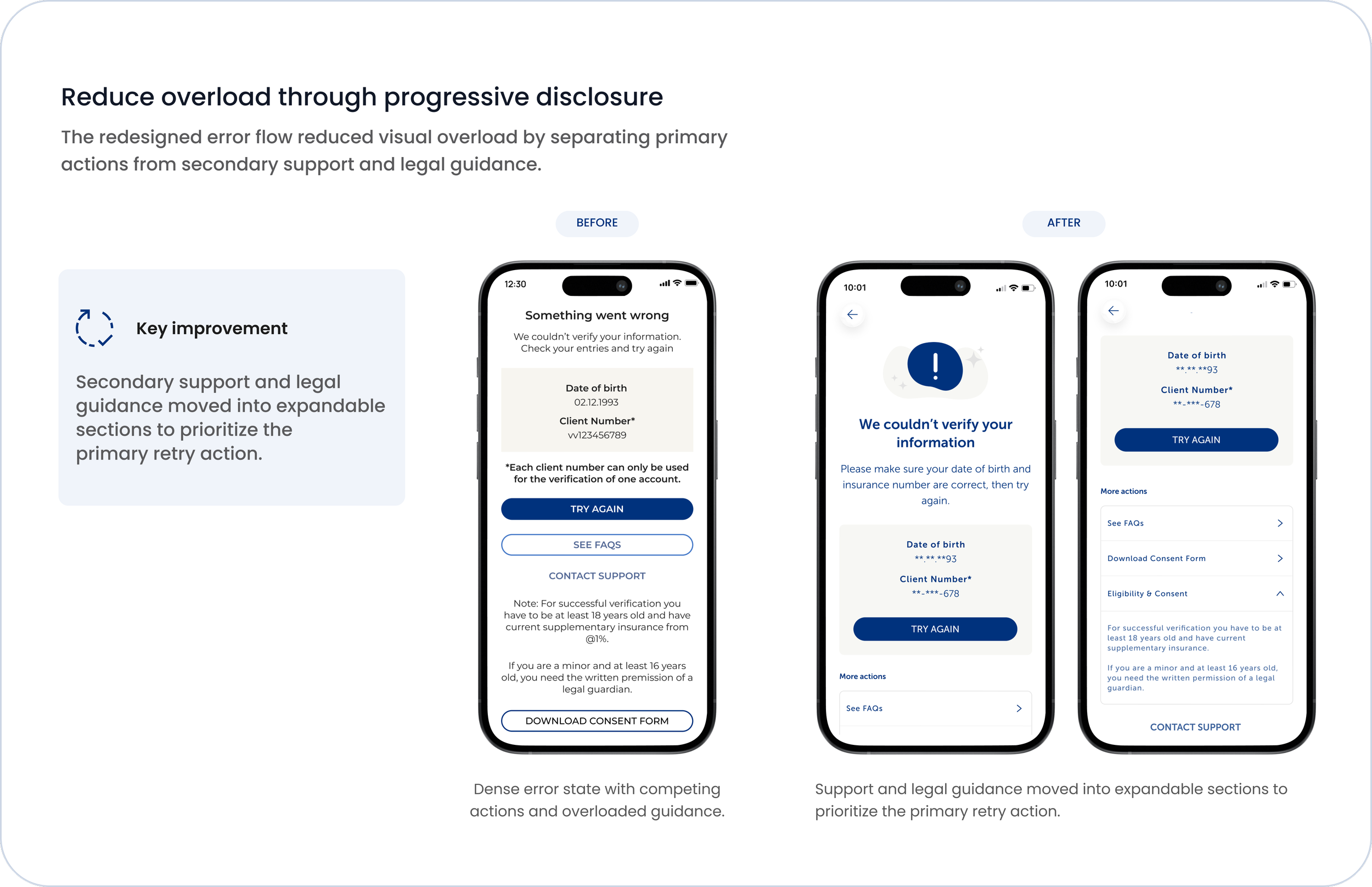
Old design buried key info in dense paragraphs, spiking cognitive load during frustration, and users struggled to grasp what went wrong.
Redesign uses a clear hierarchy: primary message up front, secondary details collapsible via an accordion for lightweight scanning.
This keeps context accessible without overwhelming, balancing brevity and depth.
Designing Around Reality
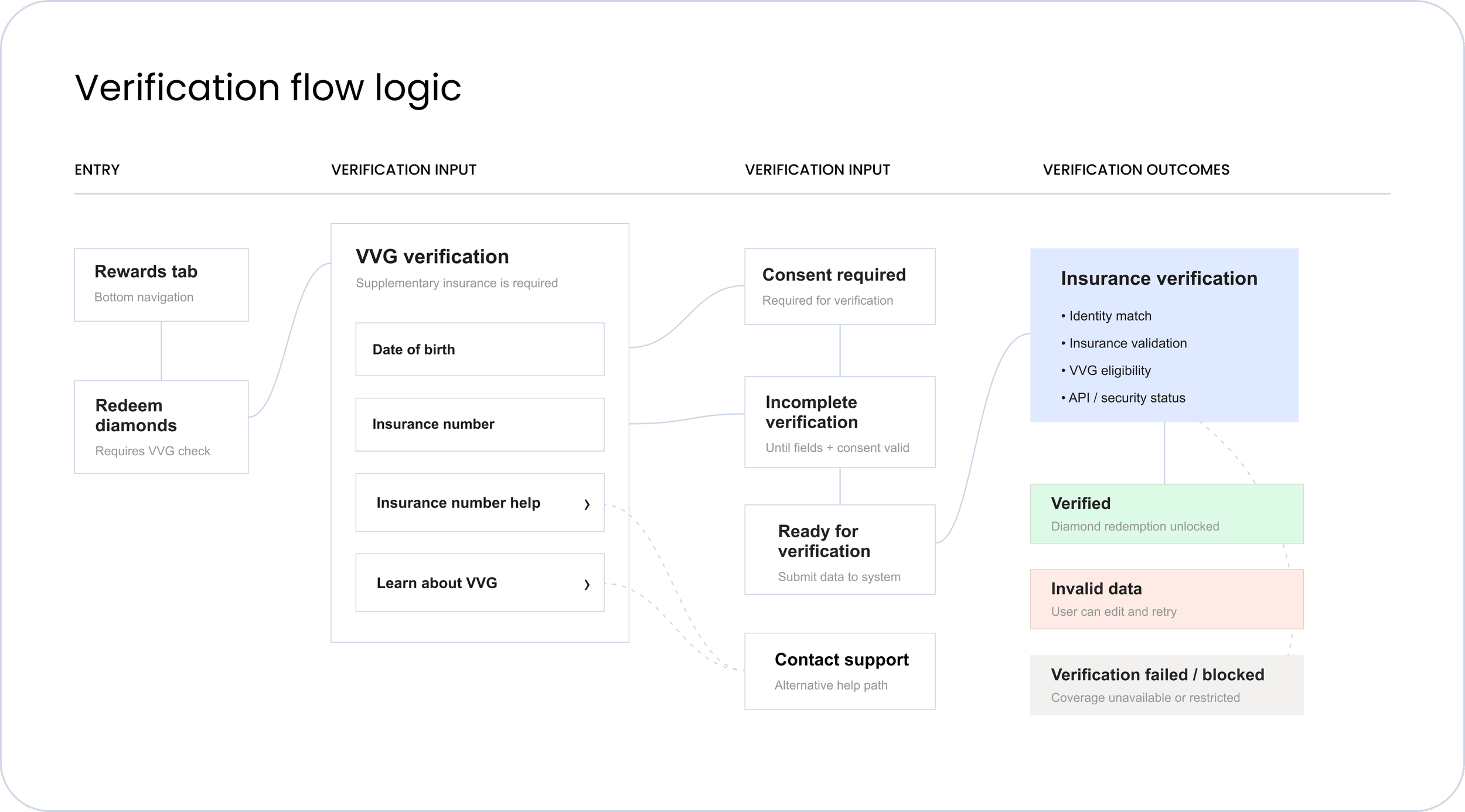
Shifted from extra error handling to a verification flow mirroring system truth-clear guidance for actionable cases, calm generality where eligibility awaited data.
Introduced a new "data pending" state, absent before, framing uncertainty as normal wait-time, not failure.
Interface now communicates plainly what's happening, reducing frustration with straightforward calm.
Validating the Changes
Before implementation, validated redesigned states via internal scenario-based testing, participants explained what they thought was happening and the next steps.
Confirmed new structure and language were clearer, especially where retrying made no sense.
Testing refined copy and hierarchy, particularly for the general error state.
Outcome & learnings
Post-rollout, verification support tickets dropped from 12.79% to ~5%, with users grasping status and next steps independently.
Reinforced key principle: error handling is core product experience, not an edge case.
Built my skill to translate system constraints into clear, human flows from reality first.